Startup Funding Options Explained: Bootstrapping vs Angel vs VC
- What Are Startup Funding Options?
- Step Zero: Validate a Startup Idea Before You Raise Money
- Test Demand Cheaply
- Write a Practical Business Plan
- Bootstrapping: Funding Your Startup Yourself
- Advantages of Bootstrapping
- Disadvantages of Bootstrapping
- Cash Flow Management for Bootstrapped Founders
- Other Early Stage Funding Sources
- Friends and Family Funding
- Startup Grants and Non Dilutive Funding
- Startup Loans and SBA Loans
- Equity Crowdfunding and Revenue Based Financing
- Pre Seed Funding Explained
- Angel Investors Explained
- Venture Capital Explained
- Angel Investor vs VC: Key Differences
- Bootstrapping vs Venture Capital: How to Decide
- Choose Bootstrapping If
- Choose Venture Capital If
- How to Raise Seed Funding: Step by Step
- Step 1: Prove Traction and Define Your Story
- Step 2: Prepare Your Materials
- Step 3: Set the Round Terms
- Step 4: Build an Investor List
- Step 5: Pitch, Follow Up and Negotiate
- Step 6: Close and Manage Dilution
- Funding Considerations for Foreign Founders
- Common Startup Funding Mistakes to Avoid
- Final Thoughts
- Frequently Asked Questions
- Latest article
Startup Funding Options Explained: Bootstrapping vs Angel vs VC
- What Are Startup Funding Options?
- Step Zero: Validate a Startup Idea Before You Raise Money
- Test Demand Cheaply
- Write a Practical Business Plan
- Bootstrapping: Funding Your Startup Yourself
- Advantages of Bootstrapping
- Disadvantages of Bootstrapping
- Cash Flow Management for Bootstrapped Founders
- Other Early Stage Funding Sources
- Friends and Family Funding
- Startup Grants and Non Dilutive Funding
- Startup Loans and SBA Loans
- Equity Crowdfunding and Revenue Based Financing
- Pre Seed Funding Explained
- Angel Investors Explained
- Venture Capital Explained
- Angel Investor vs VC: Key Differences
- Bootstrapping vs Venture Capital: How to Decide
- Choose Bootstrapping If
- Choose Venture Capital If
- How to Raise Seed Funding: Step by Step
- Step 1: Prove Traction and Define Your Story
- Step 2: Prepare Your Materials
- Step 3: Set the Round Terms
- Step 4: Build an Investor List
- Step 5: Pitch, Follow Up and Negotiate
- Step 6: Close and Manage Dilution
- Funding Considerations for Foreign Founders
- Common Startup Funding Mistakes to Avoid
- Final Thoughts
- Frequently Asked Questions
Choosing the right startup funding options can shape your company more than almost any other early decision. It decides how fast you grow, how much of the company you keep and who has a say in your business. This guide explains each path in plain language, from bootstrapping vs venture capital to angel investor vs VC, pre seed funding explained, and how to raise seed funding without making costly mistakes.
What Are Startup Funding Options?
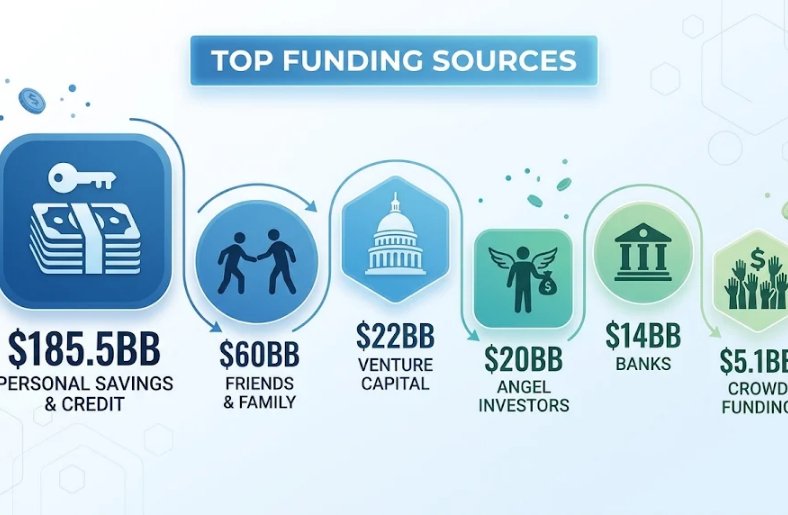
Startup funding options are the ways a founder can pay for product development, hiring, marketing and daily operations before the business is profitable. They fall into three broad groups:
- Self funding: your savings, personal income or early customer revenue
- Equity funding: you sell a share of the company to angel investors, venture capital firms or crowdfunding backers
- Debt and non dilutive funding: loans, grants, venture debt and revenue based financing, where you keep your ownership
No single route is best. The right one depends on your market, your speed, your appetite for risk and how much control you want to keep.
Step Zero: Validate a Startup Idea Before You Raise Money
Investors rarely fund an idea alone. They fund evidence. Before you chase capital, you should validate a startup idea so you can show real demand.
Test Demand Cheaply
Talk to at least a few dozen potential customers, run a landing page with a waitlist, or sell a simple minimum viable product. Look for paying customers, not just compliments. Early traction is the strongest signal of product market fit.
Write a Practical Business Plan
A business plan does not need to be a 40 page document. A clear plan covers your problem, solution, target market, pricing, competitors, revenue model, costs and a realistic forecast. A solid business plan also feeds your pitch deck and your financial model, which investors will ask to see.
Bootstrapping: Funding Your Startup Yourself
Bootstrapping means building the company with your own money and the revenue it generates. It is the most common starting point and the main alternative in the bootstrapping vs venture capital debate.
Advantages of Bootstrapping
- You keep full ownership and control
- You avoid dilution and investor pressure
- You are forced to build a product people will actually pay for
- You can move at your own pace
Disadvantages of Bootstrapping
- Growth can be slower because cash is limited
- Personal financial risk is higher
- You may struggle to hire or compete against funded rivals
Cash Flow Management for Bootstrapped Founders
Cash flow management is the survival skill of every self funded startup. Track your monthly burn rate, which is how much cash you spend, and your runway, which is how many months you can operate before cash runs out. Invoice quickly, negotiate payment terms, delay non essential hires and keep a buffer for slow months. Many startups fail not because the idea is bad but because cash runs out first.
Other Early Stage Funding Sources
Before equity, many founders look at lower pressure startup funding sources:
Friends and Family Funding
Relatives and friends may invest small amounts early. Put everything in writing, explain the risk clearly and treat it as a formal deal. Informal money can damage relationships.
Startup Grants and Non Dilutive Funding
Government programs, innovation grants and competitions give money without taking equity. They are competitive and slow, but valuable because you keep ownership.
Startup Loans and SBA Loans
Small business loans, including programs backed by the US Small Business Administration, suit companies with revenue or collateral. Early stage startups with no revenue often find approval difficult, so check current eligibility rules.
Equity Crowdfunding and Revenue Based Financing
Equity crowdfunding lets many small investors back your company online. Revenue based financing gives you capital in exchange for a percentage of future revenue until a set amount is repaid. Both can fit businesses with a community or steady sales.
Pre Seed Funding Explained
Pre seed funding is the earliest outside money, often raised when you have an idea, a prototype or very early traction. It usually comes from founders, friends and family, angel investors, small funds and accelerators.
I believe pre seed rounds commonly range from tens of thousands to around one million dollars, but sizes vary widely by country and market, so verify against recent data. The money typically pays for building a first product, running early tests and reaching the milestones needed for a seed round.
Many accelerators and incubators offer a small investment plus mentoring and introductions in exchange for equity. Competition is high, so a clear problem, a capable team and early proof of demand matter more than a perfect pitch.
Angel Investors Explained
Angel investors are wealthy individuals who invest their own money in early stage companies. They often back founders based on trust, industry experience and early signs of traction.
Angels commonly invest earlier than venture capital firms, write smaller cheques and move faster. Many also act as mentors. They may use a convertible note or a SAFE, which delays setting a company valuation until a later round. Always read the terms carefully, because caps and discounts affect how much of your company you eventually give up.
Venture Capital Explained
Venture capital firms invest money pooled from outside investors into startups that can grow very large, very fast. Because most venture backed companies do not succeed, VCs look for businesses that could return many times their investment.
VC funding typically comes in stages: seed, Series A, Series B and beyond. Each round usually brings larger cheques, a higher valuation and more governance, such as a board seat. VCs also expect a clear path to a big exit, such as an acquisition or public listing.
Angel Investor vs VC: Key Differences
When comparing angel investor vs VC, these are the main differences:
- Source of money: angels invest personal funds, while VCs manage pooled funds
- Stage: angels often come in at pre seed or seed, while VCs are more common from seed onward and especially at Series A
- Cheque size: angels usually invest less, while VCs invest more
- Speed: angels can decide quickly, while VCs run a longer review and due diligence process
- Involvement: angels vary from hands off to very active, while VCs often take board seats and set growth expectations
- Return expectations: VCs need very large outcomes, which can push your strategy toward fast growth
Bootstrapping vs Venture Capital: How to Decide
The bootstrapping vs venture capital choice comes down to your business model and goals.
Choose Bootstrapping If
- You can reach revenue quickly with low upfront costs
- You value control and a steady, profitable path
- Your market is real but not large enough for venture scale returns
- You are building a service, ecommerce, agency or small software business
Choose Venture Capital If
- Your market is very large and winner takes most
- You need heavy upfront investment before revenue
- Speed matters because competitors are racing for the same customers
- You are comfortable giving up equity and control for faster growth
Remember that you can combine both. Many founders bootstrap to first revenue, then raise outside money from a stronger position and at a better valuation.
How to Raise Seed Funding: Step by Step
If you decide equity is right, here is how to raise seed funding in a structured way.
Step 1: Prove Traction and Define Your Story
Show early users, revenue, waitlist numbers or pilot customers. Investors want evidence that demand exists.
Step 2: Prepare Your Materials
You will typically need a pitch deck, a financial model with your forecast and runway, a clear business plan summary and a basic cap table showing who owns what.
Step 3: Set the Round Terms
Decide how much to raise and what instrument to use, such as a SAFE, convertible note or priced equity round. Aim to raise enough for around 18 months of runway, which is a common rule of thumb. Confirm that with your advisers.
Step 4: Build an Investor List
Target angels, seed funds and accelerators that invest in your industry, stage and location. Warm introductions from founders or advisers usually perform better than cold emails.
Step 5: Pitch, Follow Up and Negotiate
Run your meetings in a tight window so investors feel momentum. Expect questions on market size, competition, unit economics and your team. When you receive a term sheet, have a startup lawyer review it before you sign.
Step 6: Close and Manage Dilution
Once funds arrive, update your cap table and track dilution. I believe seed rounds often sell roughly 10 to 25 percent of a company, but this varies, so check recent market data.
Funding Considerations for Foreign Founders
If you are building a startup from outside the US but want US investors and customers, structure matters. Many investors prefer a US entity, often a Delaware C corporation for venture backed startups. An LLC for a foreign founder can work well for bootstrapped or small online businesses, but it is often less convenient for institutional investors, so discuss this with a cross border tax professional.
You will usually also need an EIN and a US business bank account. Banking can be difficult for non residents, so compare online business banks that support overseas owners and prepare your formation documents, EIN letter and business plan in advance.
Common Startup Funding Mistakes to Avoid
- Raising money before validating the idea
- Giving away too much equity too early
- Ignoring cash flow management and runway
- Signing terms you do not fully understand
- Pitching investors who do not invest in your industry or stage
- Confusing a large valuation with a good deal
Final Thoughts
The best startup funding options are the ones that match your business, not the ones that sound most impressive. Bootstrap if you want control and can reach revenue quickly. Seek angel investors for early momentum and mentoring. Pursue venture capital only when your market and ambition truly require rapid scale. Validate your idea, write a clear business plan, protect your cash flow and get legal advice before you sign anything.
Frequently Asked Questions
1. What are the main startup funding options?
The main options are bootstrapping, friends and family, angel investors, venture capital, grants, loans, crowdfunding and revenue based financing. Each differs in cost, control and speed.
2. What is the difference between an angel investor and a VC?
An angel investor invests personal money, usually at an earlier stage and in smaller amounts. A venture capital firm invests pooled money from outside investors, usually in larger amounts and with more formal control and growth expectations.
3. Is bootstrapping better than venture capital?
Neither is better for everyone. Bootstrapping preserves ownership and control but may slow growth. Venture capital can speed growth but means giving up equity and meeting high return expectations.
4. How much funding do I need for a pre seed round?
It varies widely by industry and country. Many pre seed rounds are small, from tens of thousands up to roughly one million dollars. Raise enough to reach your next clear milestone, and verify typical amounts against current market reports.
5. How do I raise seed funding for my startup?
Validate your idea, show early traction, prepare a pitch deck, financial model and cap table, choose a SAFE, convertible note or equity round, approach investors who match your stage, and have a lawyer review the terms before you sign.
