Why Is The Glamping Economy Growing So Fast Worldwide
- What Is Luxury Camping and Why Has It Become a Global Trend?
- Global Market Size and Growth Trends in Outdoor Hospitality
- Key Factors Fueling the Rapid Rise of Luxury Camping
- Millennial and Gen Z Demand for Experiential Travel
- Rising Interest in Eco Friendly and Sustainable Tourism
- Major Hotel Brands Entering the Outdoor Hospitality Space
- Remote Work and Flexible Travel Lifestyles
- Social Media Influence on Travel Choices
- Regional Growth Patterns Across the World
- Investment and Business Opportunities in Outdoor Hospitality
- Challenges Facing the Glamping Industry
- The Future of Luxury Outdoor Travel
- Frequently Asked Questions
- Why is glamping becoming so popular?
- How big is the global glamping market?
- What is the difference between glamping and traditional camping?
- Which regions are leading the glamping industry?
- Is glamping a good business to start?
- Conclusion
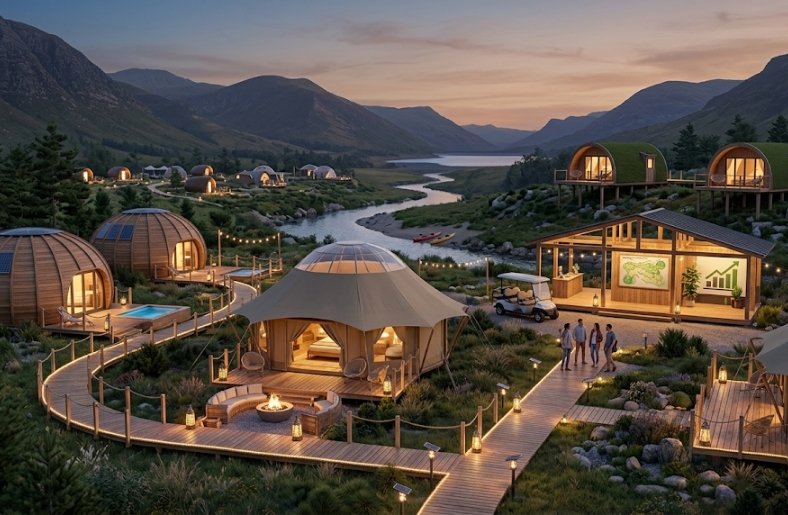
Outdoor travel has changed. Where a tent, a sleeping bag, and a campfire once defined a weekend away, today travelers expect real beds, private bathrooms, heating and cooling, and design worthy of a magazine spread, all set inside nature. This shift has fueled the rise of the glamping economy, a fast growing segment of global tourism built around luxury camping, eco pods, domes, treehouses, and boutique outdoor stays. Industry reports place the current market value well above three billion dollars, with several forecasts projecting it will more than double within the next several years. So what exactly is driving this surge, and why does it show no sign of slowing down.
What Is Luxury Camping and Why Has It Become a Global Trend?
Glamping blends the words glamorous and camping to describe accommodation that keeps travelers close to nature while removing the discomfort traditionally associated with tents. Cabins, pods, yurts, safari style tents, and Airstream trailers now come equipped with plush bedding, kitchens, hot showers, Wi Fi, and sometimes hot tubs or fire pits. The concept has roots in early twentieth century safari expeditions, where furnished canvas tents offered explorers comfort in remote settings. What began as a niche offering for adventurous travelers has now grown into a mainstream category of outdoor hospitality, appealing to families, couples, solo travelers, and remote workers alike.
Global Market Size and Growth Trends in Outdoor Hospitality
Multiple market research firms track this sector closely, and while their exact figures vary, the direction is consistent. Most reports place the global luxury camping market between three and four and a half billion dollars in the current year, with compound annual growth rates ranging from roughly eight to thirteen percent through the early 2030s. Some forecasts expect the industry to approach or exceed nine billion dollars in value within the next decade. Europe currently holds the largest regional share of outdoor luxury travel, while North America and Asia Pacific are recognized as the fastest growing regions, supported by rising disposable income and government backed eco tourism initiatives in countries such as India and Thailand.
Key Factors Fueling the Rapid Rise of Luxury Camping
A combination of cultural, economic, and technological forces has pushed outdoor luxury stays from a passing trend into a permanent fixture of modern travel. The following factors stand out as the strongest contributors to this sustained growth.
Millennial and Gen Z Demand for Experiential Travel
Younger travelers consistently choose experiences over material purchases, and the eighteen to thirty two age group now represents the largest share of glamping guests worldwide. This generation values memorable, story worthy stays over standard hotel rooms, and luxury camping delivers precisely that blend of comfort and adventure.
Rising Interest in Eco Friendly and Sustainable Tourism
Environmental awareness has reshaped travel decisions. Glamping structures typically require less permanent construction than traditional resorts, use smaller footprints, and often operate on renewable or off grid power systems. For travelers who want to minimize their environmental impact without giving up comfort, this model offers an appealing middle ground.
Major Hotel Brands Entering the Outdoor Hospitality Space
Perhaps the clearest signal of long term staying power is the entry of established hospitality giants into this space. Marriott acquired Postcard Cabins, Hyatt formed an alliance with Under Canvas, and Hilton partnered with AutoCamp, all within a similar timeframe. When major hotel chains commit capital and brand equity to outdoor accommodation, it signals confidence that luxury camping is no longer a temporary fad but a lasting category within hospitality.
Remote Work and Flexible Travel Lifestyles
The rise of remote and hybrid work has untethered many professionals from a fixed office location. Glamping sites have responded by adding reliable Wi Fi, dedicated workspaces, and longer stay packages, allowing guests to combine productivity with a change of scenery. This flexibility has extended average booking lengths and opened the door to a new category of long stay guests.
Social Media Influence on Travel Choices
Visually striking domes, treehouses, and cabins photograph exceptionally well, and platforms built around image sharing have amplified their appeal. Many travelers now select destinations based on how a property will look in photos and videos, and boutique outdoor operators have leaned into distinctive architecture and interior design to stand out online.
Regional Growth Patterns Across the World
Europe leads global market share thanks to a long standing culture of countryside tourism and well developed rural infrastructure. North America is expanding quickly as domestic road trip culture merges with a growing appetite for boutique outdoor stays, particularly in national park adjacent regions. Asia Pacific is emerging as a high growth region, with rising middle class incomes and government tourism campaigns encouraging investment in eco lodges and outdoor resorts across countries including India, Thailand, and parts of Southeast Asia.
Investment and Business Opportunities in Outdoor Hospitality
Investors have taken notice of this momentum. Venture funding and private capital have flowed into glamping operators over the past several years, with some individual raises reaching well into eight figures. Analysts covering broader travel and leisure portfolios, including those tracking global targeted return funds, have flagged experiential outdoor hospitality as one of the more resilient niches within tourism, given its relatively low infrastructure cost compared to traditional resort development and its strong repeat visitation rates. For entrepreneurs, this creates real openings in site development, equipment manufacturing, hospitality management, and booking technology built specifically for outdoor stays.
Challenges Facing the Glamping Industry
Growth has not come without friction. Seasonality remains a significant hurdle for operators in colder climates, and complex land use regulations can slow new site development. High upfront investment in infrastructure, combined with the need to maintain premium service standards in remote locations, also raises the operational bar compared to conventional camping. Operators that succeed typically address these challenges through dynamic pricing, off season programming such as wellness retreats, and partnerships with local tourism boards.
The Future of Luxury Outdoor Travel
Looking ahead, industry watchers expect the glamping economy to keep expanding as the line between hotels, vacation rentals, and outdoor lodging continues to blur. Rather than replacing traditional hospitality, luxury camping is carving out a distinct middle position between a budget tent and a five star hotel room, serving travelers who want comfort without losing the feeling of being genuinely outdoors. As more established hospitality brands, boutique operators, and independent hosts enter this space, expect continued innovation in sustainable building materials, smart off grid technology, and destination focused experiences that go beyond simply providing a place to sleep.
Frequently Asked Questions
Why is glamping becoming so popular?
Glamping combines the appeal of nature with hotel level comfort, removing the setup effort and skill barrier of traditional camping. This lower friction, paired with strong demand for experiential and photo worthy travel, has widened its audience well beyond seasoned campers.
How big is the global glamping market?
Current estimates place the global market between roughly three and four and a half billion dollars, with most forecasts projecting continued double digit annual growth through the early 2030s.
What is the difference between glamping and traditional camping?
Traditional camping requires guests to bring their own equipment and handle setup, cooking, and sleeping arrangements themselves. Glamping accommodations arrive fully furnished with real beds, private bathrooms, and often kitchens, heating, and Wi Fi, offering a hotel style experience in an outdoor setting.
Which regions are leading the glamping industry?
Europe currently holds the largest share of the global market, while North America and Asia Pacific are recognized as the fastest growing regions due to rising travel budgets and expanding eco tourism infrastructure.
Is glamping a good business to start?
Many entrepreneurs view outdoor luxury hospitality as an attractive opportunity because it typically requires lower upfront infrastructure investment than a full scale resort while offering strong margins and high repeat visitation when sites are well located and well managed.
Conclusion
The rapid rise of the glamping economy reflects a genuine and lasting shift in how people want to travel. Younger generations want experiences worth remembering, environmentally conscious travelers want a lighter footprint, remote workers want flexibility, and major hospitality brands want a share of a category that keeps expanding year after year. With strong market projections, growing investor interest, and continued innovation in design and sustainability, luxury outdoor travel is positioned to remain one of the most compelling growth stories in global tourism for years to come.
